Green electricity generated from sustainable resources such as solar, wind and hydropower, climate targets… these are all current topics. Then there are emergency plans and the threat of gas shortages. Around half of all German households currently heat with gas. Electric heating is a sensible additional option. But what is actually the most efficient electric heating? In this article, you will find out more about various electric heating systems and also receive useful background information on the history of electricity.
History of electric heating
The invention of heating with electricity
Electricity – the basic requirement for operating an electric heating system. Did you know that electricity is a natural phenomenon? A Greek mathematician recognized electricity for the first time over 2,000 years ago. He rubbed amber on a dry animal skin. The resulting electrical charge causes small feathers and straw to stick to the fur.
In the 1880s, the light bulb found its way into households around the world. Electricity was thus initially used to create lighting. The development of supply networks began and more and more electrical appliances were added to households. Electricity was already being used for heating in the 1950s. Heating with electricity became particularly popular in the 1970s. The driving force at the time was cheap night-time electricity tariffs. These promoted the popularity of night storage heating.
Current situation: time for modern alternatives
Rising gas prices, supply shortages and declared alarm levels are currently dominating the German media. According to the German Association of Energy and Water Industries, 49.5% of Germans will be heating their homes with gas in 2020. Although the gas supply for consumers is a high priority in politics, many households are concerned about alternatives.
One of the future-oriented perspectives is electricity-powered heating systems. Ideally, the electricity used is generated from sustainable sources such as wind, solar or hydropower. But the market for electric heaters also needs some background information. Although they are all united by the same energy source “electricity”, there are considerable differences in efficiency.
In this article, we would like to give you an overview of the most common electric heaters. Which ones are available? What makes them stand out? What are the advantages and disadvantages? Let’s take a closer look at this and more.
Night storage heating
In 1950, night storage heating was still considered state-of-the-art technology. This heating technology can still be found in rented apartments in particular. However, it is no longer up to date today. The heating wires heat up during the night. The surrounding stones store the heat for some time and release it during the day. The incentive at the time was cheap night-time electricity tariffs, which are rather rare nowadays.
In addition, the heat emitted by the stones cannot be stopped and there is a certain planning risk. Another advantage at the time was that no water pipe system was required for operation. However, all electric heaters have this advantage. As a result, night storage heaters are no longer considered up-to-date.
You can find out more about night storage heating and modern alternatives in this article.
Infrared heating

Infrared heaters are probably the most efficient way of heating with electricity. One unit of electricity is almost completely converted into one unit of heat. In addition, infrared heaters use direct heat. Unlike night storage heaters, for example, which work with fans and convection heat. Direct heat ensures that people and objects within a room are heated first and foremost.
Infrared heat is perceived as very pleasant. Many describe it as similar to the warmth of a fireplace or the sun’s rays. The infrared heater reaches operating temperature in just 2-4 minutes. If you are in the vicinity, you will be warm after a short time. With alternative electric heating methods, the ambient air is heated first and then people and objects. In this case, you could therefore speak of indirect heat. As a result of the indirect heat, the sensation of warmth only sets in later.
AGW (Ascherslebener Gebäude- und Wohnungsgesellschaft) provides an example of the progressive use of infrared heating. Modern refurbishment concepts are being implemented in a model prefabricated building. As part of the project, the facades of the prefabricated buildings are being fitted with solar panels. The electricity generated will be used for infrared heaters for ceiling installation, among other things. This project also benefits from the simplicity of electric heating and the efficiency of infrared.
Fan heater
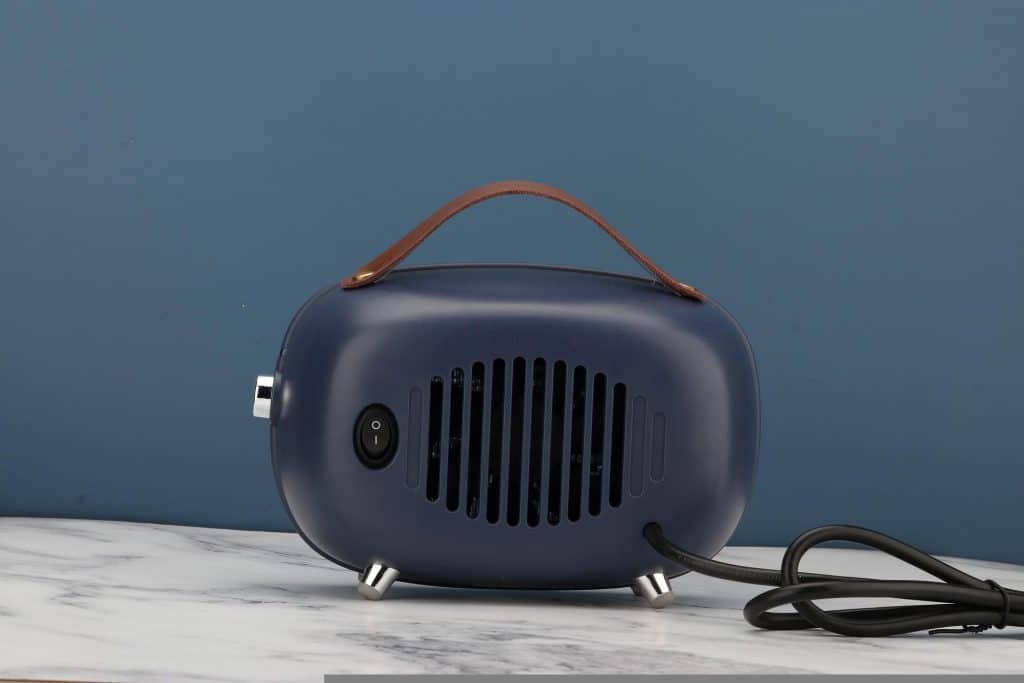
Just like night storage heaters, electric heaters were already well known in the 1950s. The fan heater is designed for occasional use and is a mobile, compact appliance. The purchase costs are remarkably low. It can be purchased for just a few euros. In purely purchasing terms, the fan heater is an inexpensive electric heater. However, it is intended purely as an auxiliary heater and is used on building sites or inside garages, for example.
Fan heaters are also powered by electricity and therefore belong to the category electric heater category. Cold air is drawn into the appliance by a motor. Heating wires inside the appliance heat the still cold air. The now warm air is then distributed in the room by a fan.
The functional principle of drawing in cold air, heating it and releasing it into the room as warm air promotes strong air circulation in the room. On the one hand, this can be perceived as “draughty”, and on the other, it stirs up house dust. An unpleasant side effect for allergy sufferers.
Conclusion – Electric heating
In general, convection heaters (fan heaters, night storage heaters) cannot compete with direct heaters (infrared heaters) in terms of efficiency. As the convection principle takes a detour via the air and does not directly heat people and objects, they are less efficient.
If you would like to find out more about saving energy, you can get 25 free tips for your everyday life here. If you are interested in what “infrared” actually is, then take a look at the article What is infrared? If you have any further questions about infrared heating, our friendly customer service team will be happy to help. Get in touch by email, chat or call us for advice.