Correct ventilation and heating go together like movies and popcorn. Both contribute to a healthy indoor climate. Among other things, they are responsible for removing excess humidity. Depending on the use of the room, there are a few things to bear in mind. In this article, you will find out what these things are, what types of ventilation there are and how long you should actually ventilate.
Why ventilate properly?
First of all, let’s get to the bottom of why regular ventilation is so important. Did you know that a household of four produces around 12 liters of humidity every day? This all happens through our breathing, showering, cooking and washing clothes. The moisture produced in this way can escape from your home through ventilation.

Ventilation also serves to remove chemical pollutants, fine dust and gaseous compounds from the indoor air. Did you know that around 12,000 liters of air flow through our lungs every day? With this figure in mind, it goes without saying why clean indoor air should be a high priority in every home. Clean indoor air is therefore important for our health. Among other things, it increases our ability to concentrate.
In the article “Moisture and mold“, we learned that there are various causes of damp walls. Infrared heating can reduce moisture and prevent mold thanks to its targeted direct heat. However, regular ventilation is a key factor in preventing mold growth at an early stage. This is because mold spores only grow in a damp environment.
The right balance of ventilation and heating therefore helps you to significantly improve your indoor climate and prevent mold. High humidity encourages the growth of mold. As this is not good for your walls or your health, you should counteract it. Below you will find a few useful tips on “correct” ventilation and what should be considered for which room.
Shock ventilation and draught ventilation
When airing your home, open your windows wide for a short time. You can also open the intermediate doors in your home. Use a door stopper or simply another heavy object to prevent them from slamming shut due to a strong draught. The whole thing then falls into the draught category. Draught ventilation is recommended for all living spaces. As soon as water vapor arises, you should always ventilate immediately. For example, when cooking or showering.
Tip: In summer, a tilted window is fine as there is no heating at the same time. In winter, on the other hand, a tilted window should be avoided at all costs. And of course, heating should not be neglected in this context. Make sure that a constant room temperature is maintained. Keep your rooms at a minimum of 17 °C. Your hallway can also be a little cooler. It should not fall below a constant temperature of 15 °C.
How long should I ventilate?
The length of the airing period depends on the time of year. In summer, one airing should last approx. 20-30 minutes. In winter, however, 5-10 minutes is sufficient. The Federal Ministry recommends airing the room several times a day. For the sake of the environment, make sure you turn off your heating during ventilation.
Now you’re probably wondering why you should ventilate longer in summer than in winter, aren’t you? Nature always strives for balance. In summer, the temperature difference between inside and outside is not so great. It therefore takes a comparatively long time for air exchange to take place. In winter, on the other hand, the temperature difference is usually quite high. This means that air exchange takes less time on cooler days.
Ventilating the various rooms
First, let’s take a look at the Federal Environment Agency’s recommendations on ventilation in various rooms:
1st bedroom: Overnight, the window can either be tilted (mainly in summer) or opened completely. If your bedroom window is on the first floor, for example, or if you don’t feel like sleeping with the window open, you can give it a good airing when you get up. Of course, this also applies in winter.
2. living rooms: Ventilation in living rooms depends on the factors that humidify the air. Do you use your living room to dry your laundry? Then you should regulate the humidity with shock ventilation. Regardless of this, you should ventilate at the latest when you notice condensation on the inside of your window pane.
3. kitchen and bathroom: As a rule, it is the kitchen and bathroom where humidity is particularly high. The drivers here are the water vapor produced during cooking as well as showering and bathing. If possible, close the respective room doors when ventilating. This will prevent odors and high humidity from moving into other rooms. By the way, did you know that cooking and frying can also produce fine dust? Well, you want to get rid of that quickly.
4. the cellar: The cellar walls are under particular strain. On the one hand, the outer wall of the cellar is usually cold, whereas the inner wall of the cellar is relatively warm. These influences can cause humidity to build up, especially in summer. It is therefore advisable to air the room thoroughly in the cool morning hours on summer days.
What else is there to consider?
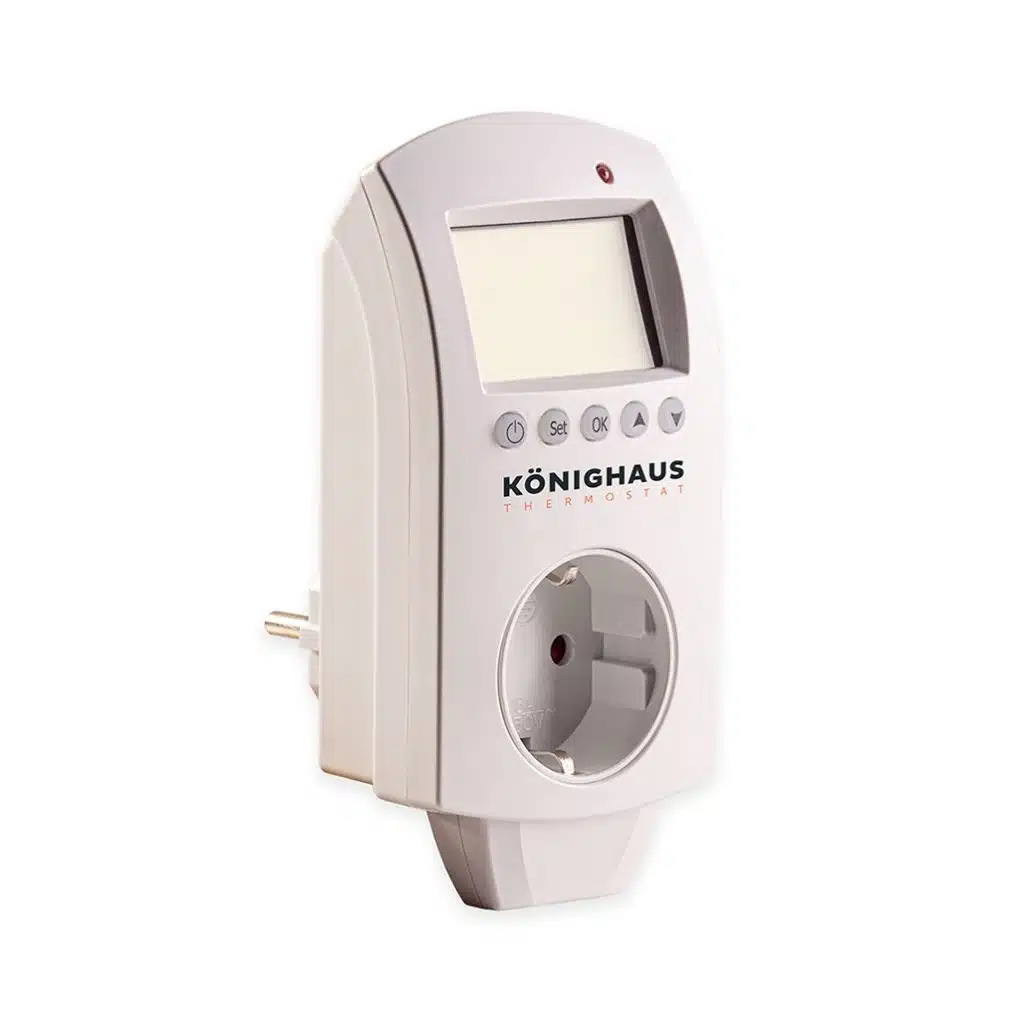
While you are ventilating, you should always make sure that you switch off your heating. Otherwise, cold air will flow into your home and your heating system will constantly try to compensate for the drop in temperature. This is especially true if you use a radiator that is located directly under the window. Könighaus infrared heaters are supplied with a thermostat as standard. The thermostat has an open window detection function. As long as an open window is detected, your infrared heater stops automatically.
However, the room air should not be too dry either. A relative humidity of between 40-60% is recommended. Dry room air can irritate your mucous membranes as you breathe in dry dust. Coughing can be the result. You can monitor the air quality in your room with a simple measuring device.
Conclusion
Proper ventilation and heating are two different things. For your own health and the preservation of the building fabric, you should make sure you ventilate regularly. This allows moisture and other pollutants to escape from the air. This increases your own well-being and your ability to concentrate. It also prevents mold growth. If you operate your Könighaus infrared heater with a thermostat, it detects open windows and your heating does not have to be switched off manually.