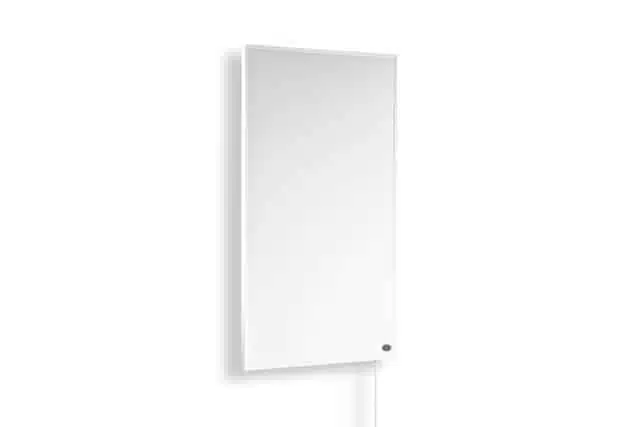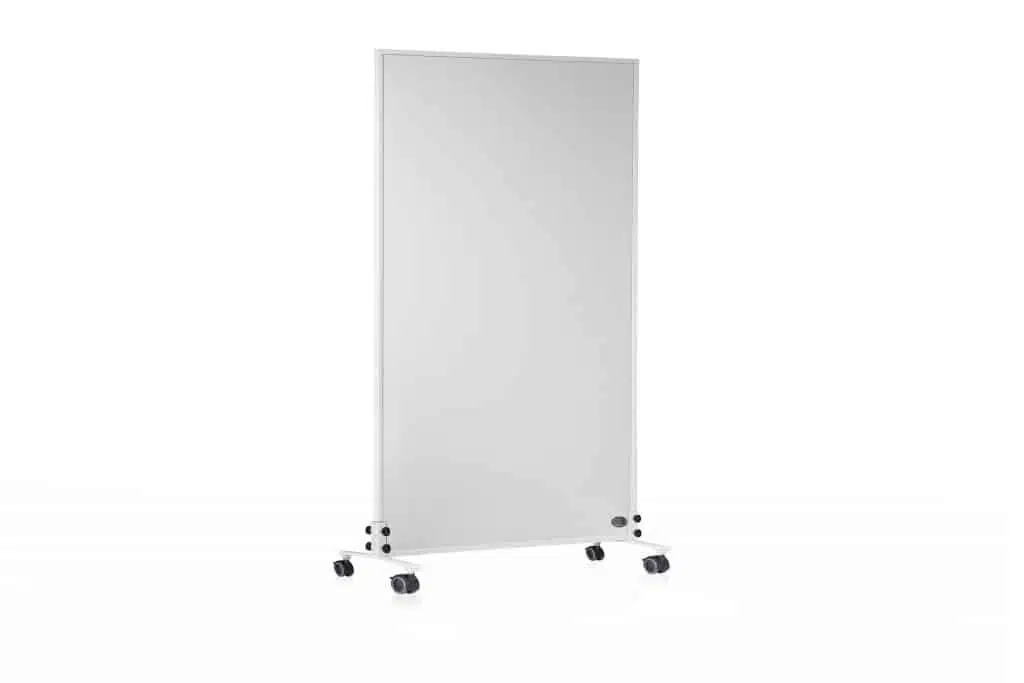
Are you thinking about getting a new heating system? Gas prices are driving you to despair and you are looking for an alternative? Congratulations, you’ve already taken the first step in the right direction. But are infrared heaters really the right choice? After all, they are powered by electricity, and where there is electricity, there is also electromagnetic radiation and that is certainly not healthy, is it? Here we answer your questions about why infrared rays are not harmful – because your health is important to us.
How does an infrared heater work?
Before we go into the individual questions, here is a brief introduction to how infrared heating works.
Infrared rays are invisible. But we can feel them. Imagine you are standing on a mountain top, it is cool and slightly cloudy. When the sun comes out from behind the clouds, you immediately feel warmer, even though the air temperature has not changed. The operating principle of infrared heating corresponds exactly to the principle of the sun, which radiates natural infrared heat. The warmth of infrared heating is often perceived as being as pleasant as the sun’s rays or the warmth of a tiled stove. The rays first warm the surface of the body and are then transported further in the body.
Do I get headaches from infrared heaters?
The great advantage of infrared heating is not only its ease of use, but above all the fact that it is also suitable for allergy sufferers and people with respiratory diseases. Due to the absence of air turbulence, the fine dust pollution is lower than with conventional heating systems, the air is not as dry and the unpolluted air increases general well-being. There is therefore no risk of headaches, rather the opposite. The risk of getting a headache is reduced by using infrared heating.
Are infrared rays carcinogenic?
Clearly not! You really don’t need to be afraid that your infrared heater is carcinogenic. Compared to UV rays, the C rays from an infrared heater are in no way dangerous and your health will not be affected.
Am I exposed to electrosmog?
Electrosmog – what is it actually? Unfortunately, there are often misunderstandings here, because electrosmog does not refer to the cables of your toaster or the light bulb in your bedside lamp. The word “electrosmog” refers to both low-frequency electric and magnetic fields and high-frequency electromagnetic fields. Low-frequency is when the frequency of the electricity is below 100 kilohertz, such as your washing machine or electric stove. As soon as an appliance is connected to electricity (regardless of whether it is switched on or not), the appliance and the supply line are surrounded by electric fields. The advantage: low-frequency fields can be shielded by room or house walls without any problems.

With high-frequency fields between 100 kilohertz and 300 gigahertz, the situation is different. High-frequency fields can detach themselves from the source, for example a transmitting antenna, and propagate in waves. Radio transmission and mobile telephony are also based on this effect.[1] This electromagnetic radiation cannot be easily shielded.
Whether electrosmog actually causes illness has not yet been scientifically clarified and is controversial.
One thing is certain: an infrared heater does not emit dangerous electrosmog, because as we have just learned, the term electrosmog refers to high-frequency radio waves (government radio, satellite communication, military radio, GPS, but also WLAN, Bluetooth or cell phones). However, this has nothing to do with infrared heating, as this only transmits heat by means of C-radiation.
Is infrared heating dangerous?
The surface of infrared heaters gets hot, because the fast and efficient heat generation means you don’t have to wait long for the room to warm up. You can set and regulate the time and duration of the heating as required using the socket thermostat supplied. When the temperature is reached, the heater switches itself off and its overheating protection ensures that it is not overloaded. So you don’t need to worry about the heater posing a danger. Our infrared heaters are of course TÜV SÜD tested and CE certified.
Are infrared rays harmful to my eyes?
A clear no! As you know, the rays of infrared heating are as pleasantly warming as the rays of the sun, but unlike the glaring rays of the sun, you don’t need to be afraid to look closely at our infrared heaters. You can look at your new heater as long and as often as you like. ? Have you thought about having your personal favorite motif printed on the heater? Then it will be even more fun to look at!
Another advantage (not just for contact lens wearers): As the infrared heating does not change the humidity in the room and no dust is stirred up, your retina does not dry out and your eyes itch less. Great, isn’t it?
Enjoy breathing
We have already mentioned under “Headaches” that infrared heaters are particularly suitable for allergy sufferers and people with respiratory diseases due to the absence of air turbulence in the room.

But free breathing is not only important from this point of view; when we think of damp in rooms, mold immediately springs to mind. Perhaps you have already had to deal with this problem personally: as soon as these unsightly stains appear on the wall, quick action is required. Mold spreads very quickly and can be a danger not only to the fabric of the building but also to your health. If you live in a home with mold infestation, the risk of respiratory diseases and respiratory infections increases. Mold can also cause allergic reactions such as runny nose, eye irritation, headaches, fatigue, skin and mucous membrane irritation, as well as itching and coughing.
Infrared heaters are excellent for drying walls in a targeted and efficient manner. How long drying takes depends on various factors. The material and thickness of the wall and, of course, the degree of moisture play a role here. As a preventative measure, you can install an infrared heater on the outer walls – this reduces temperature fluctuations and reduces condensation. This is because infrared heating keeps the temperature and humidity in living spaces constant and ensures that the walls do not cool down or become damp. Find out more about the topic here.
Conclusion
In summary, it can be said that heating with infrared is not harmful to health. An infrared heater works with long-wave C-rays, which are similar to natural sunlight and on which every living being on our planet depends. The longer the wavelength of the rays, the lower the radiation energy. Infrared C radiation, for example, only penetrates about 0.3 mm deep into the skin and is not the same as UV rays or X-rays.
Want to know more?
We are delighted if we have been able to show you new aspects of infrared heating. There is a lot more exciting information to discover. For example, would you like to know more about humidity in rooms? Or are you interested in infrared heaters with your own photo? Just visit our blog regularly – it’s worth it! If you have any further questions, our friendly customer service team will be happy to help you – by phone, email or chat. We look forward to hearing from you.