The topic of “infrared heating as an alternative to night storage heaters” is becoming very popular, especially in view of the high additional electricity payments. In this article, we would like to take a look at the structure and function of night storage heaters. Why was it considered state-of-the-art technology in 1950? Why does this type of heating have some disadvantages nowadays? And why are infrared heaters the ideal successor to night storage heaters? You can find out this and more in this article.
Let’s start with…
What is a night storage heater and how does it work?
Structure of the radiator
Night storage heaters (also known as night storage heaters) were considered modern heating technology during the 1950s. They replaced oil and coal stoves at the time. Electric night storage heaters require electricity and convert it into heat. The electricity heats the heating elements, which are surrounded by refractory bricks. The artificially produced fireclay bricks slowly absorb heat and release it just as slowly.
The heat output can be felt for several hours to several days. Heating elements and stones are housed in a large casing. As the name “night storage heater” suggests, heat is fed in during the night. During the day, the heat is distributed throughout the room. A fan is responsible for heat distribution.
The idea of night storage heating
… Now we have learned about the structure of the night storage heater. Why was night storage heating actually invented? Why was it considered state-of-the-art technology around 70 years ago?
The reason for this was the energy industry. The power plants were constantly producing electricity. However, the demand for electricity was significantly higher during the day than at night. While demand was easily met during the day, there was an oversupply of electricity at night. To date, there is no sales market for this overcapacity. In order to sell the electricity anyway, producers offer it at particularly low prices during the night. Some resourceful minds know how to take advantage of the cheap night-time electricity.
This is where night storage heating comes into play. This always requires electricity at night, i.e. when it is cheapest. During the night, the heating elements and the surrounding stones heat up. During the day, the power supply stops and the stones release the heat slowly and constantly. The fan distributes the heat evenly throughout the room. Sounds clever so far, doesn’t it?
However, the efficiency of night storage heating is rudimentary. Although the fan can be switched off, the stones continue to emit the stored heat. This means that efficient heating in line with demand is not possible. Night storage heaters are therefore not particularly efficient and take up a lot of space. And especially when there is no longer a cheap night-time electricity tariff, night storage heating offers little added value these days.
The modern advancement
Infrared heating as an alternative to night storage heaters
The electricity market changes over time and the state of the art is constantly evolving. This is why alternative solutions are in demand today that seamlessly replace the night storage heaters of yesteryear. Infrared heaters are an alternative to night storage heaters and can be seen as a clever modification of them.
The simple installation is a big plus point for night storage heaters. No water-bearing pipe system is required to operate it. It is connected to the existing power grid. Just like the night storage heaters of the past, modern infrared heaters are also connected to the normal power grid. Infrared heating is therefore ideal in terms of installation. This is because it is connected to the mains via plug and play using a standard Schuko plug. So if you want to switch from storage heaters to infrared, you don’t have to retrofit a water pipe system.
High efficiency and needs-based heating
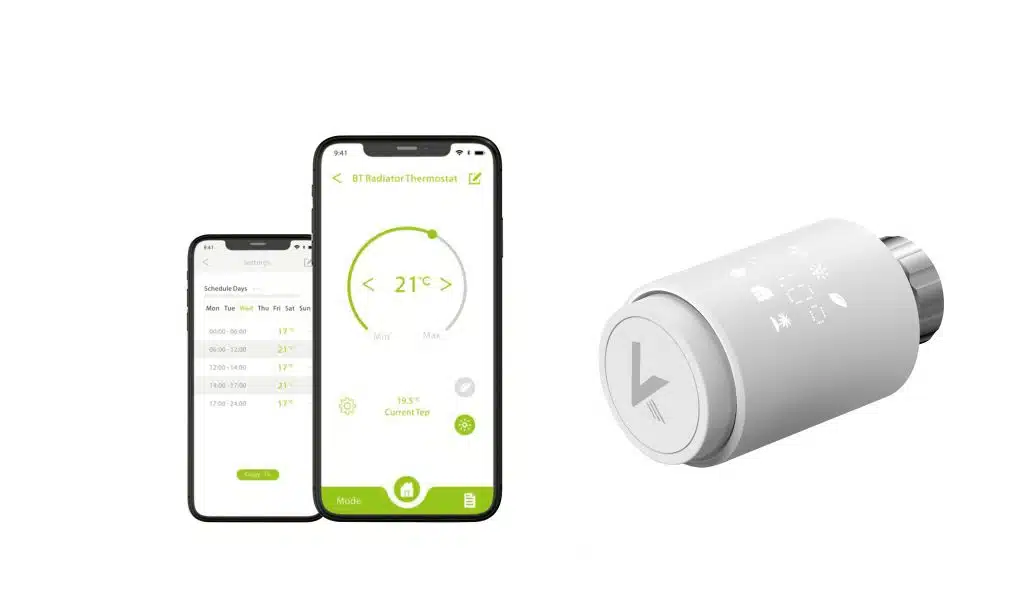
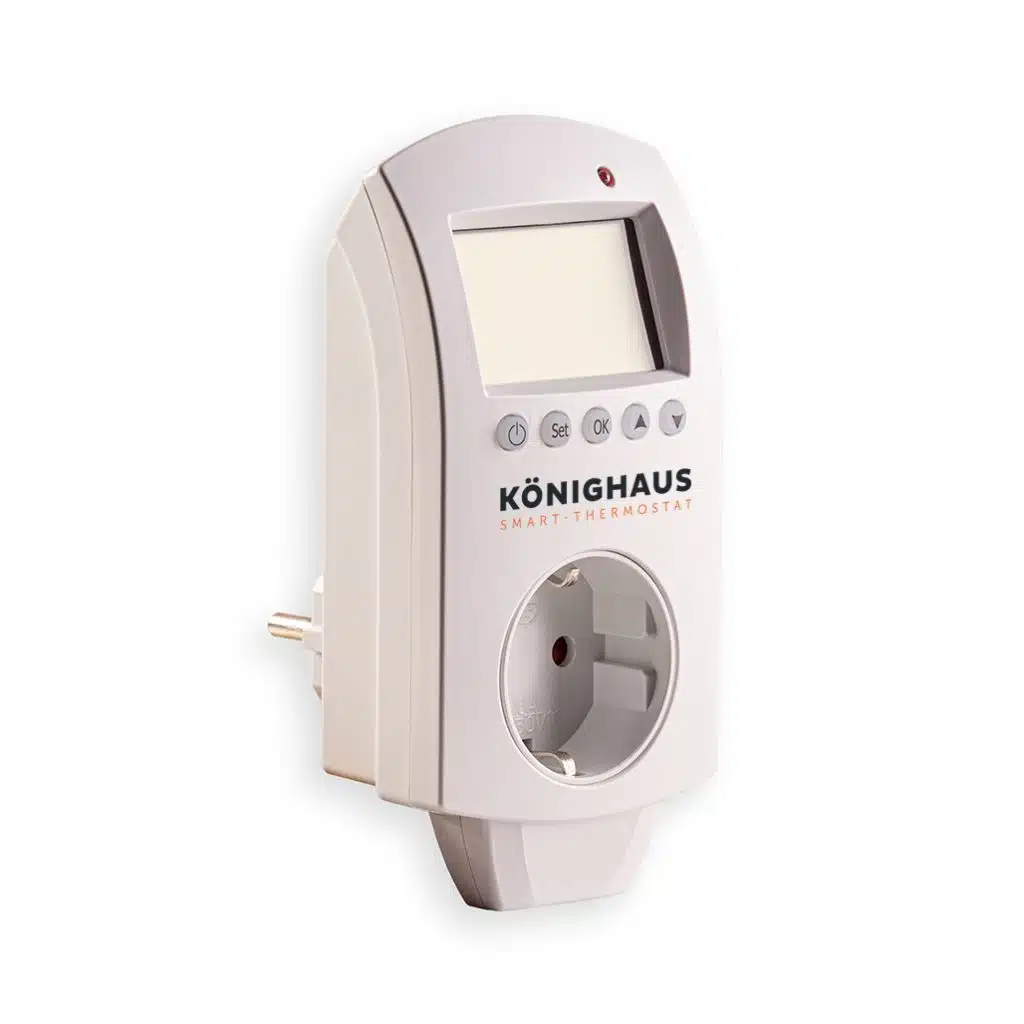
The efficiency of infrared heating is many times higher than that of night storage heating. The fireclay bricks release the stored heat continuously throughout the day. An infrared heater with a thermostat, on the other hand, can be regulated and heats according to demand. The best way to control it is via a manual or smart thermostat. This allows you to plan heating periods and also the times when you are out of the house and want to switch off the infrared heater. The Könighaus thermostat also detects whether windows are open. If this is the case, it stops the heating process for this period. As soon as the thermostat detects closed windows, the infrared heater switches on again automatically.
The visual advantages of infrared heaters are the small amount of space they take up and their discreet appearance in the form of a picture, mirror or ceiling panel. Once the night storage heaters have been removed and replaced by infrared heaters, additional living space is gained thanks to the narrow infrared heater. The second also wins in the comfort comparison between night storage heaters and infrared heaters. Infrared heaters are noiseless and odorless. They also work with radiant heat and do not have a fan that could stir up the air and dust. The direct heat without air turbulence makes infrared heating particularly interesting for house dust allergy sufferers.
The advantages that storage heaters had back then have been retained when using infrared heaters. Installation is child’s play and only requires access to the normal power supply. No maintenance work is required and the chimney sweep doesn’t need to visit you. Since infrared heaters are so easy to replace the outdated backup heater and heat much more efficiently and in line with demand, they can be regarded as a modern evolution of the backup heater.
Conclusion
Infrared heaters are a good alternative to night storage heaters. As the fireclay bricks of the night storage heater constantly give off heat, this form of heating is considered inefficient. Especially when the cheap night-time electricity tariff is no longer available. As infrared heaters can be individually regulated and only consume electricity when they do, they are the ideal successor to night storage heaters.
If you would like to find out more about saving energy, you can get 25 free tips for your everyday life here. If you are interested in what “infrared” actually is, then take a look at the article What is infrared? If you have any further questions about infrared heating, our friendly customer service team will be happy to help. Get in touch by email, chat or call us for advice.