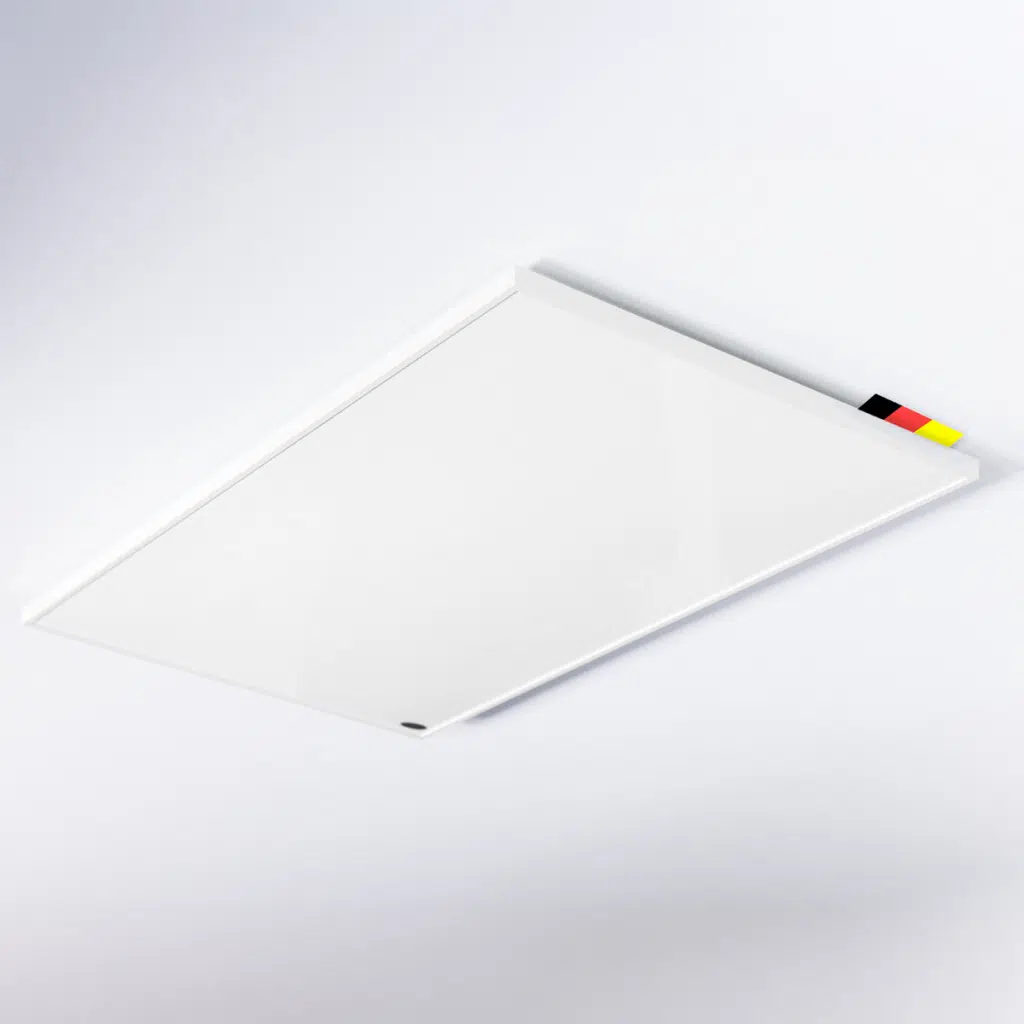
We are all experiencing it every day at the moment – the cost of living is rising. The inflation rate was 7.6 percent in June this year. Everything is getting more expensive – whether it’s butter, flour, fuel or heating costs. Reason enough to think about where you can save, right? And what about infrared heating as an alternative to gas?
Why are gas prices rising?
There are various reasons for this. We list the most important reasons here:
- Russia’s invasion of Ukraine is considered one of the main reasons for the price increase.
- After falling in the last two years due to the coronavirus pandemic, demand for natural gas has risen significantly again this year.
- China is planning to switch from coal to liquefied natural gas in the next few years in order to reduce its greenhouse gas emissions.
- Many gas supplies have been depleted due to the cold winter of 2021.
- There has been a CO2 price for fossil fuels in Germany since 2021. Energy suppliers pass on some of the costs to their customers.
- Approval of the new Nord Stream 2 natural gas pipeline halted
Do we have a problem?
According to the Federal Ministry for Economic Affairs and Climate Protection (BMWK) of 7 July 2022, gas flows from the Nord Stream 1 pipeline are currently at around 40 % of maximum capacity. The 1224-kilometer pipeline was commissioned in 2011 and is the most important connection for the supply of Russian natural gas to Germany. The annual maintenance work will run from July 11-22. This means that no gas can flow through the pipeline during this time.
You ask yourself: why is this so important? After all, maintenance takes place every year and so far hardly anyone has shown any interest in it.
That’s right. As long as everything works smoothly, there are no demands. Similar to the electricity from the socket. It is simply there. But a lot has changed since Russia’s war of aggression against Ukraine. The big worry is that Russia won’t turn the gas tap back on after the maintenance.
Will we soon be completely without gas?
No. One scenario, for example, could be that Norway increases its gas supplies to Germany. But what does the Federal Ministry for Economic Affairs and Climate Protection’s declaration of an alert level in the gas emergency plan actually mean?
We have briefly summarized the three stages for you here, you can find detailed information here.
The emergency plan is divided into three escalation levels:
- Early warning level: Gas suppliers and operators of gas pipelines are obliged to regularly assess the situation and inform the federal government.
- Alert level: Here, for example, the federal government can support companies in the gas supply chain in the event of sharp price increases in their ability to pay.
- Emergency level: In this measure, there is a significant disruption to the gas supply. In this case, the Federal Network Agency, in coordination with the gas suppliers, ensures the distribution of gas according to certain criteria.
In the event of an emergency gas supply, we look at which companies are systemically relevant and which are not. The production of medicines is of course more important for the population than the production of chocolate and potato chips. Sorry 😉
There are also plans that require certain industries, such as the chemical sector, to limit their production or be disconnected from the gas supply in an emergency. Did you know that this industry is the largest gas consumer in Germany, accounting for 15 percent? [1]
And we as end consumers should also limit our consumption. Not only because gas prices have risen by a whopping 83% since the start of the year[2], but also for the sake of the environment. After all, heating consumes around 70 percent of all household energy. In this article, we have put together 25 tips for saving energy . Have a look!
Alternative: infrared heating?
The sun is shining from the sky, record temperatures are on the horizon and the cold months seem a long way off. But many people in Europe are worried about what to do with rising gas prices. It won’t be long before fall is just around the corner. It is unlikely that the situation will have eased by then. Despite the heatwave in Germany, these uncertainties are leading more and more people to look for possible heating alternatives. We have listed the pros and cons of various heating methods here.

But what about infrared heaters as an alternative to gas heating?
The advantage is obvious: infrared heaters offer the option of gas-independent heating. They are easy to install and, in addition to the low purchase costs, offer the advantage that – in contrast to gas heating – there are no additional maintenance costs.
Are you wondering how infrared heating actually works?
A classic radiator heats the ambient air in the room, the air circulates and the heat rises. With infrared heaters, on the other hand, the objects, walls, ceilings, people, etc. are heated evenly and then transfer the heat to the room air.
Thanks to the fast and efficient heat generation (the heater reaches operating temperature in 2-4 minutes), you don’t have to wait long for the room to warm up. You can also set and regulate the time and duration of the heating to suit your needs.
And best of all: in combination with a photovoltaic system, you can operate the infrared heating system in a 100% climate-neutral way. Great, isn’t it?
All of this shows that infrared heaters are a safe and powerful alternative to gas heaters. You can find detailed information about infrared heaters on our blog.
Conclusion
The topic of energy and resource extraction is currently being talked about more than ever before. Even if the trigger is a terrible one. Nevertheless, it is a good sign that these issues have moved more into the spotlight. For many years, the necessary energy transition and the associated effects were dismissed as “irrelevant”. Events like these are making more and more people realize that we cannot carry on as before and that we need new ways of thinking for the sake of the environment and future generations.
Want to know more?
We are delighted if we have been able to interest you in this topic. There is a lot more exciting information to discover. For example, would you like to find out more about the effects and destruction caused by lignite? Or are you interested in the article about the sun? Just visit our blog regularly – it’s worth it! If you have any further questions, our friendly customer service team will be happy to help you – by phone, email or chat. We look forward to hearing from you.