The 2021 electricity mix shows that wind energy is the number one source of public electricity generation (according to the Fraunhofer Institute). Let’s take a closer look at the generation of wind energy: How is a wind turbine actually constructed? How is electricity generated from wind? What does the industry behind the wind turbines look like? You can find out more here.
Electricity mix in Germany
Let’s first take a look at the electricity mix in Germany. This will give us an initial idea of which energy sources are available and from which sources our electricity comes. The electricity mix indicates the share of the individual energy sources in the total electricity production. Incidentally, your energy provider is also obliged to disclose its own electricity mix. This allows you to compare the extent to which it is in line with the German electricity mix.
The Fraunhofer Institute provides an analysis of public energy generation in 2021. Wind energy leads the way in the electricity mix, closely followed by lignite. Nuclear energy is in third place, followed by gas. The other energy sources are in the following order: solar, hard coal, biomass, with hydropower bringing up the rear.
The electricity mix changes from year to year, especially in times of the energy transition. The data presented here is therefore only a snapshot.
How do you make wind energy?
Wind is a free and inexhaustible source of energy, which is precisely why it is so interesting for us. Wind turbines can be found on land and at sea. In 2021, wind energy is the number one source of public electricity generation in Germany. Now let’s take a closer look at the process from wind to the electricity that we as end consumers draw from the socket.
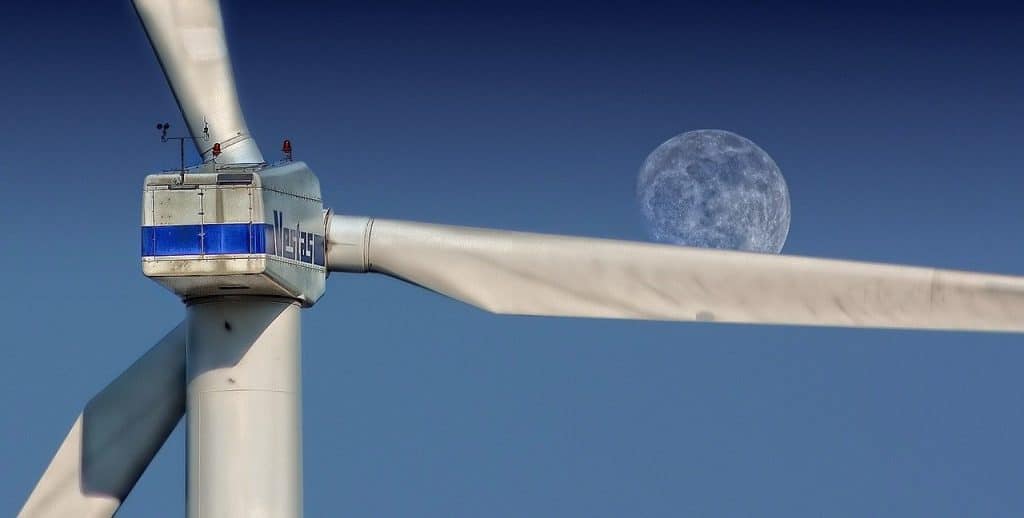
Structure of a wind turbine: The three rotor blades are shaped like the wings of an airplane. From a wind speed of approx. 10 km/h, they start to move. An axle rotates inside. A gearbox increases the rotational speed. The movement is transmitted to a generator via another axle. The task of the generator is to convert the kinetic energy into electricity.
Although wind turbines are relatively easy to erect and the wind energy generated is considered clean, this technology also has disadvantages. Yields fluctuate depending on how strong the wind is. If the wind is exceptionally strong, the wind turbine may even shut down. The optimum wind speed is around 50 km/h. On the other hand, it creates a background noise and disturbs birds in their natural habitat. However, wind turbines erected close to residential areas can also cause shadow problems (due to the rotor blades) and disturb residents.
Manufacture and assembly of wind turbines
The manufacture of wind turbines is one of the fastest growing industries in the world. The challenge lies in longer blades and more powerful technology. In addition, wind turbines must be designed for longevity: the average service life is 20 years. During this period, they are in motion for around two-thirds of the time. This corresponds to a full 13.2 years.
Construction of wind turbines on the mainland
The foundation is a stable framework made of concrete and steel that is supported by pillars that reach deep into the ground, depending on the load-bearing capacity of the subsoil. When building the tower on this foundation, only small tolerances in the order of “millimeters” are permitted. Ring after ring is placed loosely on top of each other with great precision and later fixed in place with steel cables.
Once the tower and its electronics have been erected, the rotor blades still need to be installed. These are transported to the assembly site by vehicles with special trailers. Incidentally, modern rotor blades have a kind of comb on the outside. This dampens the noise during operation.
Offshore wind farms
To guarantee a service life of 20 years, the highest precision is required in the industrial section. The continuous functionality of the turbine must be guaranteed. Especially with offshore wind turbines, repairing a defect is very costly. The reason for this is difficult accessibility at sea.
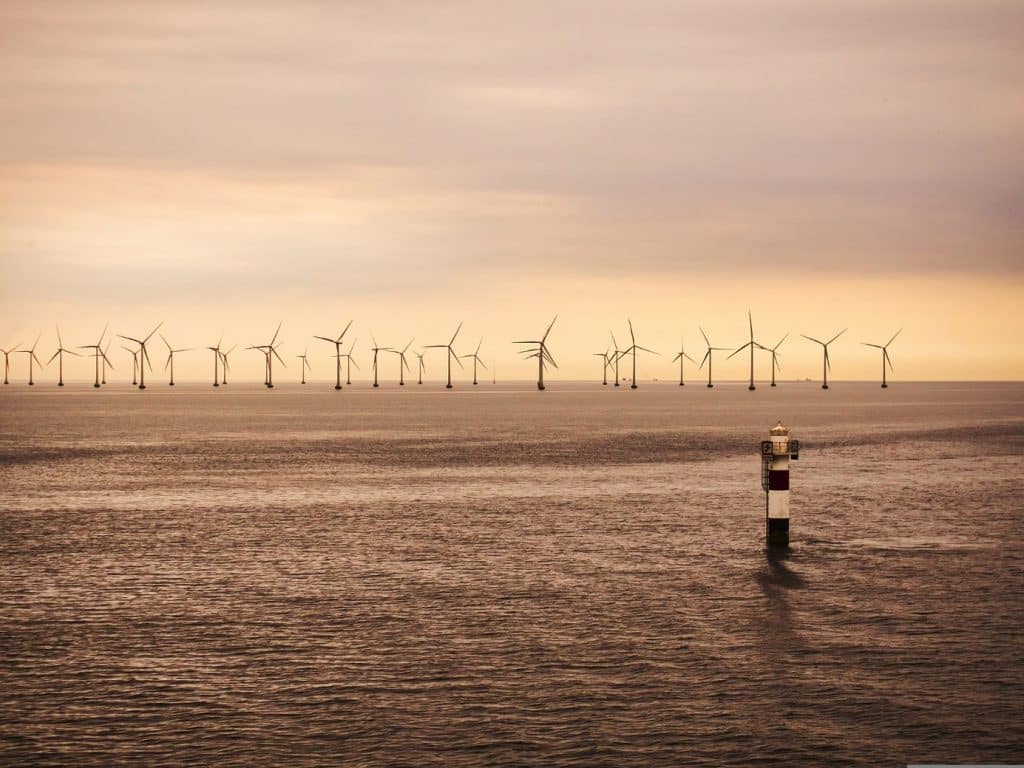
The technical requirements placed on wind turbines are increasing every year. To make them more efficient, they are being built even larger, among other things. A large rotor diameter is responsible for producing comparatively more electricity.
Offshore construction is particularly challenging because factors that cannot be influenced, such as the weather, play a role here. Since 2004, around 100 turbines have been added to the German offshore wind farm every year. In order to comply with nature conservation regulations, the wind farms are only erected far off the coast.
Fun Fact
Finally, a fun fact: did you know that the rotors always turn clockwise? There are some wild theories as to why. But what is really behind it? On the one hand, the standardized direction of rotation ensures a uniform landscape, and on the other hand, the industry standard has cost advantages. The individual rotor blades are built asymmetrically. If you wanted to erect wind turbines that rotate clockwise and counter-clockwise, you would need a second construction method for the rotor blades. To avoid this, a global standard has now been established.
Conclusion
Wind energy is now so competitive because the technology has been around for several decades. The turbines and the span of the blades have improved massively over time. Sensors are responsible for taking measurements. The measurement results are passed on to an observation center. In this way, possible faults can be analyzed and the wind turbine shut down if necessary.
As Könighaus infrared heaters can be operated with 100% renewable energy, the topic of wind energy is also highly relevant for us. If you have any questions about heating with infrared, please take a look around our online store or contact our helpful customer service team for detailed advice.