Restful sleep is important, especially for the youngest among us. Because when children sleep badly, it is not only stressful for everyone involved, but also has an impact on the child’s development and health. Find out more about heating in the children’s room here.
Requirements for a good night’s sleep
Children need adventures, want to have experiences and be active. Whether outdoors or indoors – it’s important to be together and share experiences. Whether your children have met up with their friends, learned a new piece of music or experienced something exciting at school – after such experiences, they are tired, exhausted and satisfied. This mental and physical exercise is important for a pleasant state of exhaustion and helps you to fall asleep relaxed.
But it’s not just the experiences of the day that help with the process of falling asleep, rituals are also very important. Fixed rituals and structures give your child stability. Adults often mistakenly think that they are restricting or “punishing” their child when they set firm rules. But the opposite is actually the case. Fixed routines before bedtime help your child to adjust to the situation in advance. Thanks to the recurring routines, your child knows what is happening and doesn’t have the feeling of being sent to bed “suddenly” at what feels like an arbitrary time. This means that conflicts about the “right” time every evening can be avoided in advance.
I am tired, go to rest …
A basic requirement for a good night’s sleep is quite simple: being tired. Because if you’re not tired, you can’t sleep. After all, we all feel that way. On the other hand, your child may already be too tired to fall asleep relaxed. In this case, it is important to correctly recognize and interpret signs such as yawning, eye rubbing, irritability or impatience.
Children naturally have very different sleep needs – some get by with very little sleep, while others lie in bed all the longer and feel great. The information provided by the Federal Center for Health Education (BZgA) in the following table is therefore only intended as a guide. Deviations of two hours are normal.
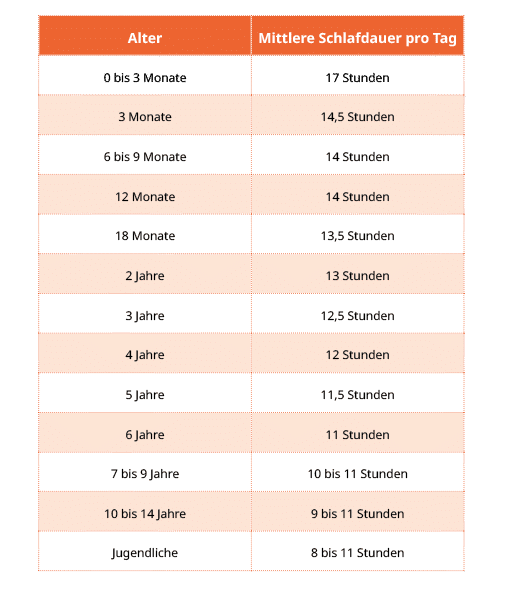
Too little sleep can have serious long-term effects, as many developmental processes take place during the night. Indications of too little sleep can be
- Restlessness and fidgetiness
- Easily distracted and unfocused
- More susceptible to infections
- Exhaustion from everyday life
- Increased risk of obesity
Measures for healthy sleep
So what measures can you take to give your child a healthy and high-quality sleep? We have put together some ideas and suggestions here that can make it easier for your child to sleep. Please note: every child has individual requirements, so not every suggestion will necessarily appeal to your child. If you notice no improvement in problems falling asleep or sleeping through the night, have your child examined by a doctor.
- Sleeping is not a punishment and should neither give the impression nor be used as such. Ideally, going to bed should be fun and arouse anticipation for the next day.
- Teach your child the process of going to bed through regular rituals such as reading aloud, talking about the day, listening to calm music or putting their favorite cuddly toy to bed.
- No more wild activities or sporting activities should take place shortly before going to sleep. A string of lights creates a cozy and relaxed atmosphere in the children’s room and heralds bedtime.
- Don’t let your child use electronic devices such as tablets, smartphones or computers for at least an hour before going to bed and remove them from the child’s room. On the one hand, studies show the effects of links between smartphone use at night and poor sleep quality (BMC Public Health journal)1. Secondly, the blue light from electronic devices prevents the production of the sleep hormone melatonin. A lot of light in the evening not only disturbs the internal clock and changes the sleep rhythm, exciting videos or articles also keep your children occupied while they sleep.
- Darken the room. Light from outside can disturb children when falling asleep. However, some children don’t like it to be completely dark, so a small night light is helpful here.
Pssssst ….
- Quiet please! So that your child can sleep peacefully, it should be quiet in the apartment/house. Noise can seriously disturb your child’s sleep.
- Your child should not have any caffeinated drinks such as cola, iced tea etc. before going to sleep. Caffeine keeps you awake and increases activity in many children. Many of these drinks also contain a high sugar content. So it’s better to avoid them completely
- There should be no heavy meals right before bedtime. It’s not just adults who toss and turn sleeplessly after a sumptuous meal. It’s better to eat dinner a little earlier – at least one hour before going to bed.
- Take a look at how much your child sleeps on average. It may also need an extra nap and sleep better at night without it.
Heating in the children’s room
Children’s rooms are all-in-one rooms. This is where they sleep, do their homework, build dens, play and romp with friends or cuddle up with the dog. Life’s adventures start right here. But if the room is cold, playing is no fun. This is because children usually move around a lot on the floor – whether playing, dreaming or listening to music. You’re thinking: surely underfloor heating is ideal for a child’s room? Not necessarily. We have summarized why this is the case and how you can ideally heat such an all-purpose room here.
Let’s start with the design of the child’s room. Depending on the age of the child, a lot of things accumulate in a room like this. Closet, bed, desk, boxes, stuffed animals, stools, shelves, toys, etc. The problem with conventional convection heating is that if you cover the radiator, the heating effect is also lost. The radiator cannot radiate properly and the thermostat does not receive the correct data. So you are heating ineffectively and, in case of doubt, very expensively for minimal effect.
Make sure that your child’s bed is never placed in front of a heater. Children are much more sensitive to heat and cannot escape the heat in a crib. The ideal room temperature for small children at night is 18-19 °C. During the day you should set the thermostat between 20-22°C. Higher temperatures promote dry air, which in turn can irritate the mucous membranes. This is because babies and small children in particular tend to catch colds and respiratory illnesses more quickly. Another important point when the crib is placed in front of or next to the heater is air circulation. The heat from the heater not only stirs up dust, but the heat also rises. As children tend to spend most of their time on the floor, they need the heat up there the least. You can find more information about allergies and dry air in the cold season here.
Underfloor or infrared heating?
In principle, underfloor heating can also be used very well in children’s rooms, but it becomes difficult if the rooms cannot be regulated individually using a thermostat. In order to achieve a good quality of sleep, it must be possible to lower the temperature during the night. As underfloor heating reacts much more slowly than other heating methods, it is not possible to lower the temperature with many of these floor systems. It is important that you seek expert advice before installing underfloor heating.
Alternatively, an infrared heater in the children’s room can be used to regulate the heat with pinpoint accuracy. This gentle and gentle heating method does not stir up any dust, making this heating method ideal for children (and adults) with allergies. Objects, walls and people in the room are heated evenly and then release the heat into the room air. This ensures an even and pleasant temperature throughout the room. Another advantage: the infrared heat also provides a cozy feeling for babies and small children without getting too hot. The temperature can be regulated and individually adjusted via an app – an infrared heater is also a safe alternative to conventional heating methods above the changing table.
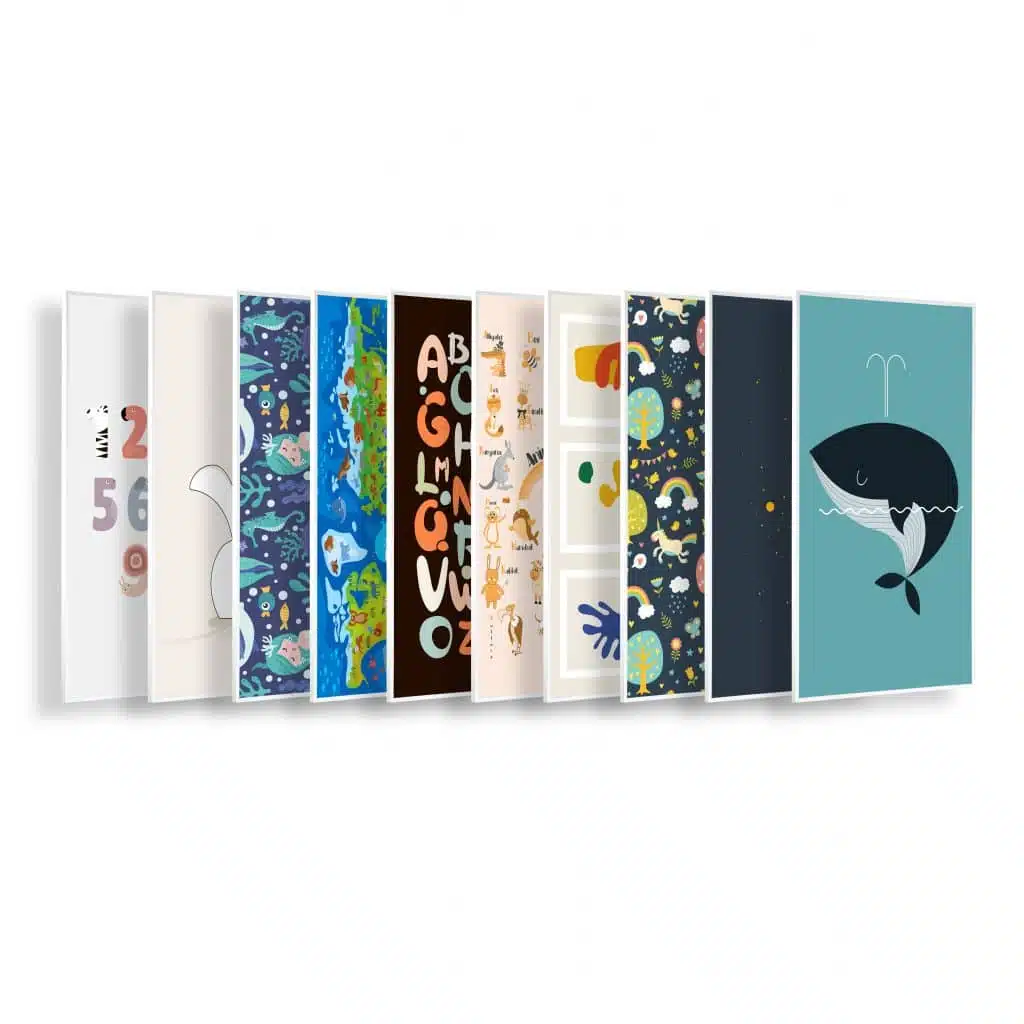
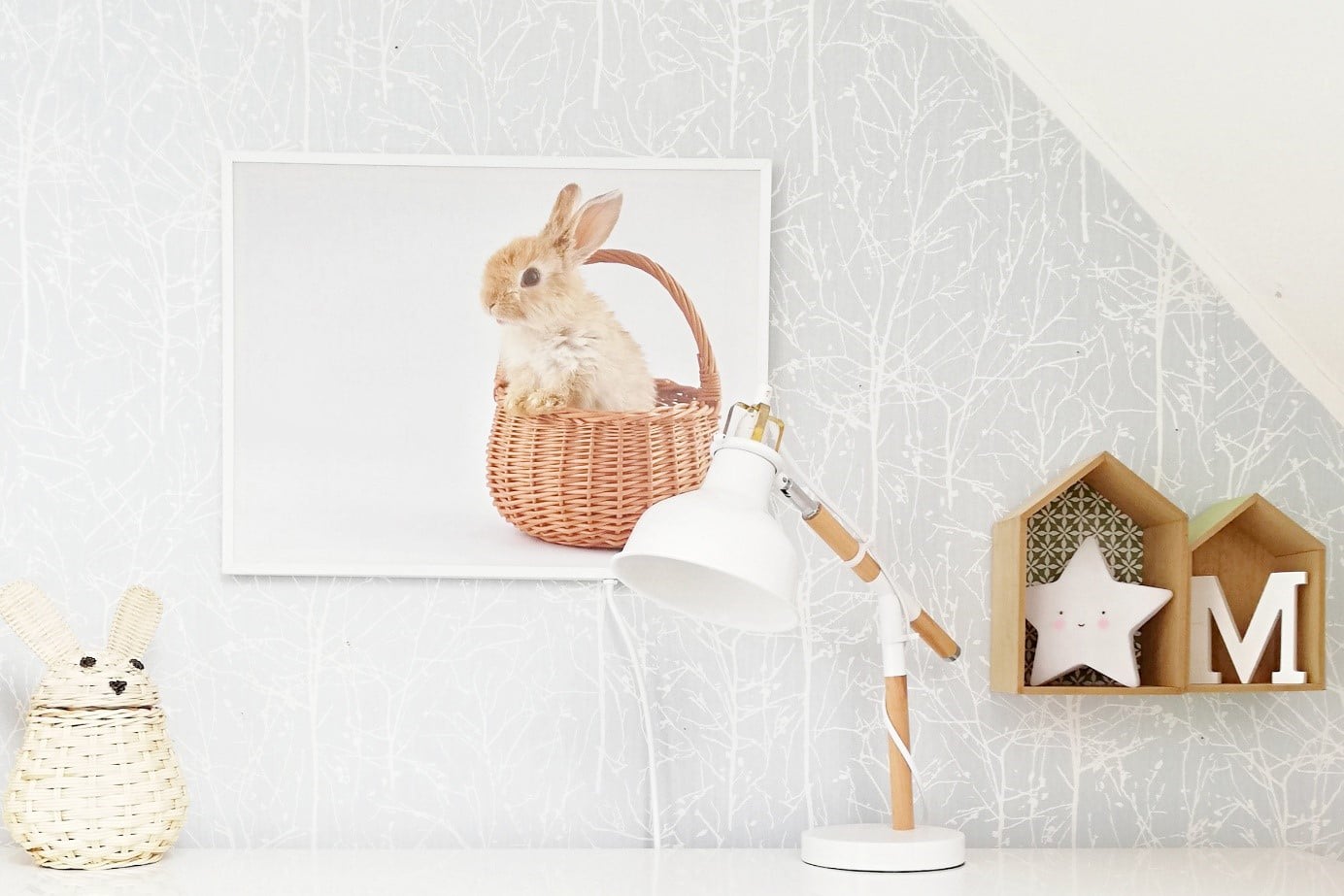
And the best thing is: heaters don’t just have to be white. Whether it’s colorful parrots, funny cartoon characters or a photo of your favorite stuffed animal – our infrared heaters can be printed with any motif and bring even more fun into the children’s room.
Conclusion
The topic of sleeping and heating in the children’s room is certainly a bit of a challenge. This is because every child has different needs and preferences that need to be identified and taken into account. Patience and empathy paired with the necessary information is a good combination here so that you can provide your child with optimal and beneficial sleep quality.
Want to know more?
We are delighted if we have been able to show you new aspects of infrared. There is a lot more exciting information to discover. Take a look at our article on the optimum room temperature. Or would you like to find out more about the benefits of ceiling heating? Just visit our blog regularly – it’s worth it!
If you have any further questions, our friendly customer service team will be happy to help you – by phone, email or chat. We look forward to hearing from you.