Do you already keep a few domestic chickens? Or are you toying with the idea of getting a few hens in the future? That’s understandable. We also know the charm of chicken clucking and fresh eggs in the morning. In this article, we give you useful tips on how to keep your feathered friends happy in winter with a pleasant coop climate. Here you can find out everything you need to know about infrared heating in the henhouse and its advantages over other types of henhouse heating.
Chickens usually feel comfortable even in cool outside temperatures. To protect itself, the domestic chicken has developed mechanisms to keep warm during the cold season. It boosts its metabolism . This accelerated process compensates for heat loss. So much for the theory. Of course, the physical characteristics of chickens are just as different as those of us humans. Factors such as age, size and body volume also play a role in our domestic chickens. Consequently, their resistance to cold is not always the same.
Pleasant stable climate
Supporting chickens with an additional heat source? Opinions differ. However, the chickens are just as different as the opinions. As the saying goes? Not all chickens are the same. What is certain, however, is that a pleasant coop climate is good for your animal. Regular ventilation supports this. Occasional shock ventilation is more efficient than constantly tilting the window. Also avoid a damp climate in the coop. This also protects the chicken coop to prevent mildew and mold growth.
Use natural insulating materials to support a pleasant stable atmosphere. These include hay, straw and bedding. These materials laid out in large quantities provide a cozy retreat for your chickens. Opinions are divided on the subject of coop insulation. On the one hand, good coop insulation should already be taken into account during construction. On the other hand, no coop insulation would be a safer solution with regard to mites. Once they are in the insulation, you can’t get them out again.
If the temperature is below freezing, an additional heat source can be considered. How warm the henhouse is in the end or whether it should just remain frost-free is best decided by yourself.
However, it is important that the drinking trough remains frost-free. Either with a coop heater or alternatively with an electric drinker warmer. This at least ensures that your domestic chickens are supplied with water at sub-zero temperatures and that it does not freeze.
Chicken barn heating: infrared panel vs. infrared lamp
The requirements for a barn heating system are a fast heating effect and high efficiency. Also, in an environment of hay, straw or bedding, a glowing heating variant should not be chosen. Regardless of which type of heater you ultimately choose, we recommend that you look for a CE mark on the device.
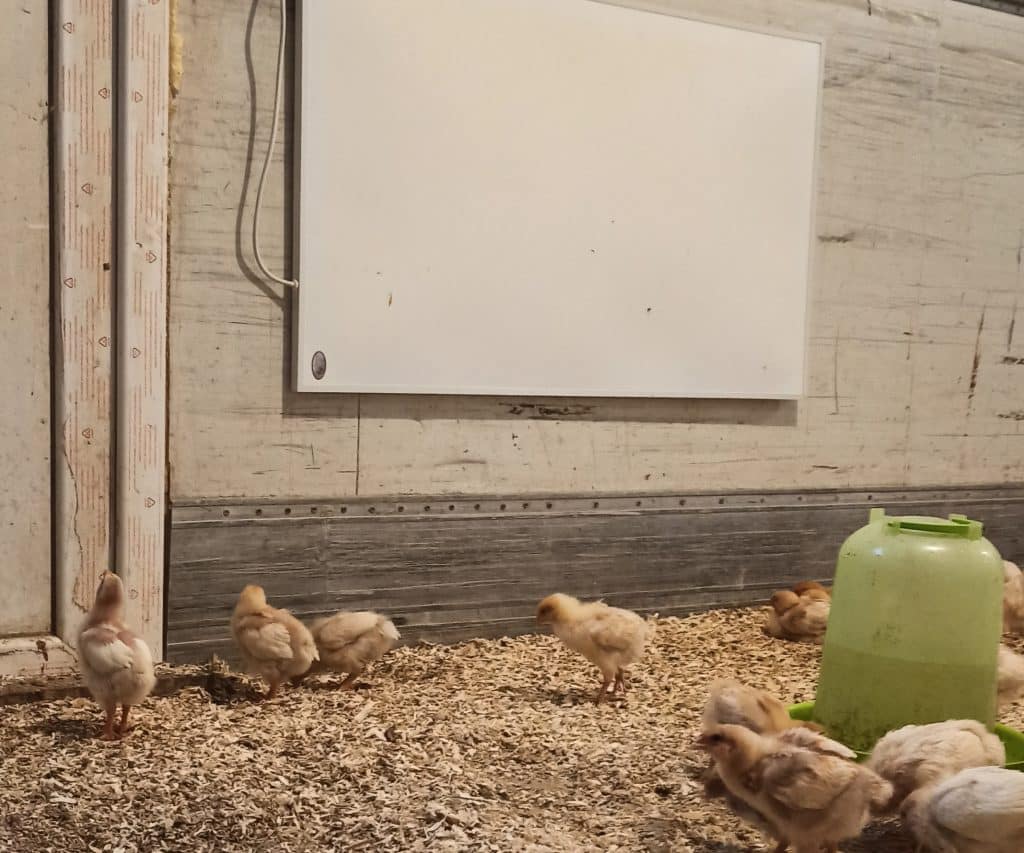
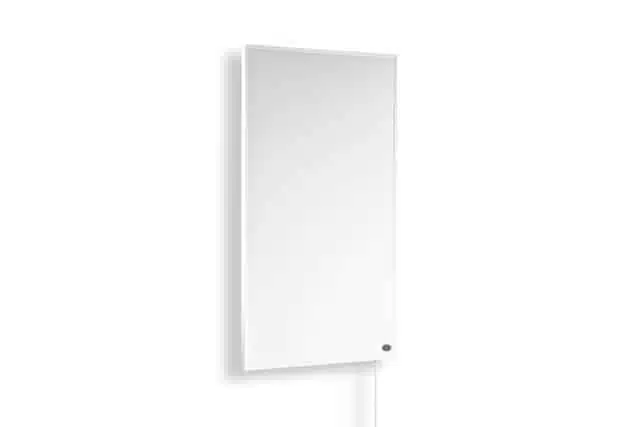
There are different barn heating systems. A lot is also personal preference. Staying on the subject of infrared, let’s take a closer look at infrared panels and lamps. An infrared panel is usually very thin. A Könighaus infrared heater, for example, has a depth of less than 2 cm. The panel is mounted either on the wall or on the ceiling. Very space-saving in both cases. Only a standard power connection is required for commissioning. In other words, a normal power socket. And then you’re ready to go. True to the motto: plug and play.
Tip for installing your infrared heater: Use the drilling template supplied and place the spacers on the screws. This ensures air circulation between the barn wall and your infrared heater.
In contrast to infrared lamps, the panels have several advantages. The panels do not emit any light. The lamps can disrupt the day and night rhythm of the hens and disturb their sleep. However, the infrared lamps can also be retrofitted with so-called dark radiators to prevent this. Speaking of disturbance – did you know that Könighaus infrared heaters emit heat completely silently?
Nordhof (picture above) has opted for a Könighaus infrared heater from the P series. If you would like a splash of color instead of a plain white panel, you can also have your own picture printed on the infrared heater. Take a look at the photo heaters.
Infrared direct heat
You can read about all the advantages of infrared heaters in a previous article. However, the principle of direct heat is worth mentioning. Chickens and litter are heated directly by electromagnetic waves. “Direct” means that the ambient air is not heated first until the heat finally reaches the chickens. This is the case with most other heating methods. The air heats up first and then the air heats the animals. Due to the direct heating principle, infrared heaters are also often used as a preventative measure against mold and cold bridges and are considered to be particularly effective.
“Chickens are not naturally sensitive to the cold. But they prefer it when it’s not quite so cold. The chicken coop heating should simply do them good and provide our feathered friends with some warmth on frosty nights. However, it is neither sensible nor healthy to heat the henhouse to room temperature! I think our chickens feel really comfortable at 8 – 10°. An IR heater from Könighaus is a welcome upgrade for any chicken coop. If you have everything, you’re missing the chicken coop heater.”
Royal house customer Stephan Göd from hendlstall.at
Please note: Room temperature in the hen house is not healthy. The henhouse heating provides support on frosty nights.
How much power for which barn size?
The P-series with 130 watts can be used from a barn size of 4 m². Please ensure a minimum distance of 50 cm between the heater and the animal.
Jensman (video below) has opted for a 450 watt version. How much power you need for your henhouse is entirely individual and depends on a number of factors such as the size and insulation properties of the henhouse and how warm your feathered friends like it. Feel free to contact our customer service team. They will help you to equip your hen house.
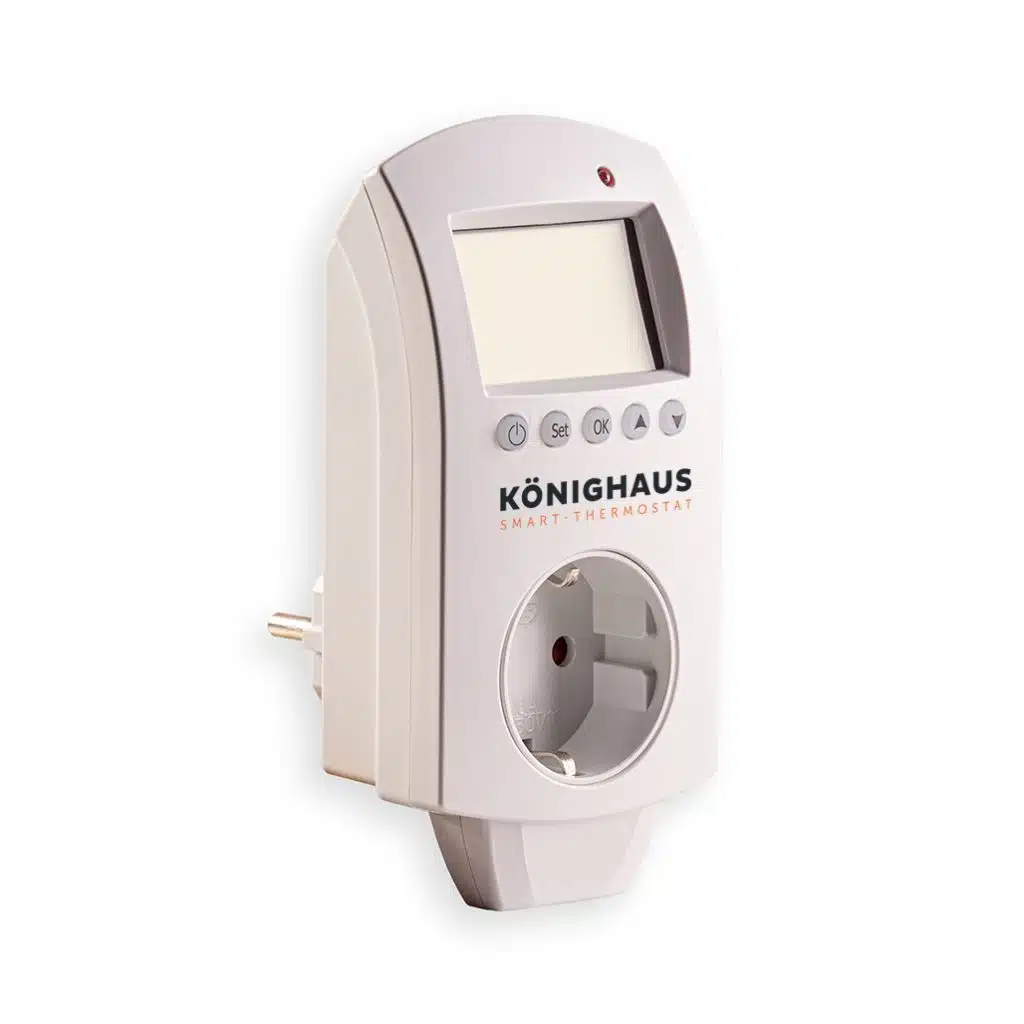
To ensure the desired stable temperature, we recommend connecting a socket thermostat in between. This allows you to make all the important settings, such as ensuring frost protection. A smart thermostat is also practical. This allows you to regulate the temperature of the hutch from the comfort of your sofa using your smartphone. This may save you the odd trip outside in the cold.
Conclusion
Coop heaters are certainly a target-oriented and space-saving option for a frost-free chicken coop. To ensure that the Könighaus infrared heaters are also suitable for your individual coop, we recommend that you contact our customer service.
Want to know more?
We are delighted if we have been able to show you new aspects of infrared heating. There is a lot more exciting information to discover. For example, would you like to know more about individually printable photo heaters? Or are you interested in how a desk heater works? Then simply visit our blog regularly – it’s worth it!