Have you ever wondered what the optimum temperature is for each room? Of course, the room temperature is a personal preference. However, if you’re unsure and would like some guidelines, then you’ve come to the right place. In this article, we’ll go through all the rooms in a household and look at exactly how high or low the optimum temperature should be. In other words, a little guide on how to keep your home at the perfect temperature.
Disclaimer: These values refer to the year 2021. In times of the gas crisis, it may be 1, 2, 3 °C less. This guide will give you an understanding of which rooms should be warmer or cooler and why.
The right balance is key, because too much heating harms the environment and your wallet. Too little heating increases the risk of mold growth. Find out what you can do to combat damp and mold in this article. Optimized heating (combined with regular ventilation) is therefore worth at least one blog post, maybe even more. Speaking of ventilation, did you know that in a household with 4 people, a whole 12 liters of moisture are released into the air every day? The Federal Environment Agency states that this happens through washing, showering, cooking and, last but not least, breathing.
In this article, we have summarized everything you need to know about proper ventilation.
First of all, the tabular summary. Read on if you want to find out more about the background and how these guide values come about.
What room temperature?
| Bedroom | 15-19 C° |
| Bathroom | 23 °C |
| Kitchen | 18 °C |
| Living rooms | 20-22 °C |
Optimum room temperature for sleeping
On average, we spend a third of our lives sleeping. Quite a lot, isn’t it? During sleep, we want to regenerate from the day. We want to recharge our batteries for the day ahead. That’s why it doesn’t hurt to take a look at the optimum bedroom temperature.
A temperature of 15-19 C° is considered “healthy”. The average is therefore 17 C°. The Techniker Krankenkasse recommends around 18 C° and a good airing out before going to bed. Sleep researchers explain the comparatively low room temperature by the fact that the falling body temperature is a signal to fall asleep. It is important that the extremities, i.e. arms and legs, are well supplied with blood. This is the only way to dissipate body heat.
A hot bath can help you fall asleep. When bathing, the body temperature first rises and then falls again. This sends a signal to the body to fall asleep. Incidentally, “sleeping too warm” is exactly the opposite. Because then we sweat in our sleep, toss and turn from side to side and dream vividly. The whole thing is almost comparable to fever dreams.
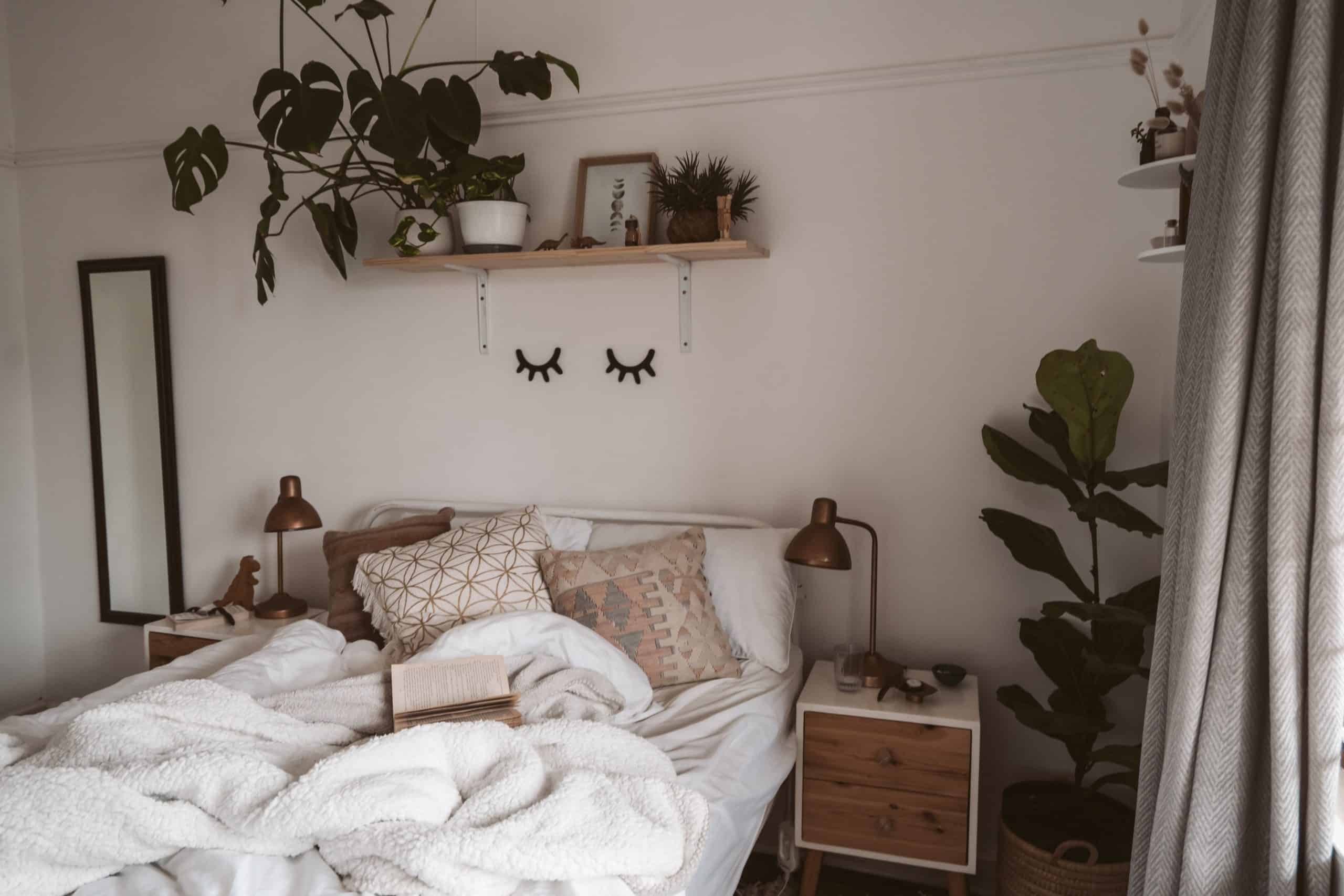
A temperature of around 17 °C is recommended in the bedroom.
Want even more recommendations for restful sleep? We have summarized our top 5 tips for you here.
The perfect temperature in the bathroom
The bathroom should be the warmest room in your home. The reason for this is that you don’t want to get cold after showering. We aim for a temperature of 23 °C here. From your own experience, you may know the feeling of coming out of a hot shower or bath and then stepping onto ice-cold tiles. Brrr… pretty cold. That’s why we can very well understand the bathroom as the “warmest room in the house”.
However, you do not have to heat the bathroom continuously. On the contrary, only when you are actually in it. Controlling this is particularly easy with a (smart) thermostat. For example, if you know that you go into the bathroom for half an hour every morning at 7 a.m., you can plan the heating time precisely. By the way, did you know that there are also infrared heaters that double as a bathroom mirror? Pretty clever, isn’t it? If this is of interest to you, just take a look at the Könighaus mirror heaters.
Heating with infrared in the bathroom is particularly practical, as the heating panel only needs an average of 3 minutes to reach operating temperature. That’s pretty quick compared to underfloor heating, which can take a few hours to heat up.
How much °C in the kitchen?
The kitchen – the place where we prepare our meals. Our preferences when it comes to hot and cold meals are very different. Some like it warm in the morning – with tea, coffee or warm oats. Others like to replace hot fried potatoes with a quick, cold slice of bread. However, every well-equipped kitchen contains a number of electrical appliances (which are used to a greater or lesser extent) and produce their own heat.
Be that as it may, a temperature of around 18 °C is recommended for the kitchen. This temperature is about as low as that in the bedroom, but the reason for this is different. As a rule, the kitchen heats up when hot food is prepared. For example, by cooking on the hob or using the grill function of the oven. With the recommended temperature, you create a pleasant compromise between heating and cooking heat.
How do I control the temperature in my living space?
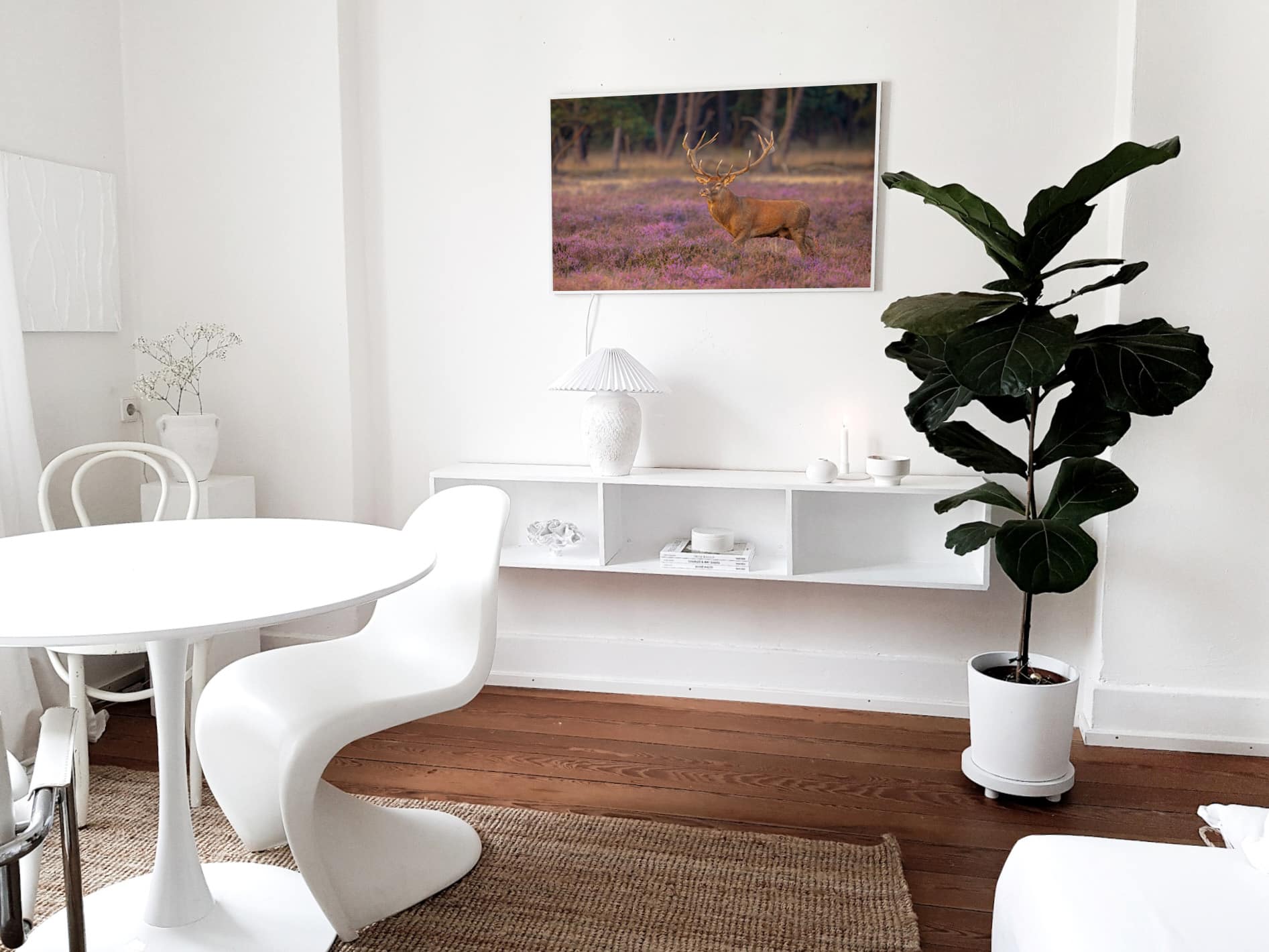
Picture heater from the Golden Autumn collection
A temperature of between 20 and 22 °C is recommended for living rooms, such as the classic living room. Personal comfort plays an important role here. If it still feels a little cold, we recommend looking out for leaks in windows and doors and taking countermeasures. This will prevent draughty air from entering your rooms. Do you remember the long dachshund, aka draught excluder, lying in front of the gap in the front door?
What if I’m not at home?
If you are not at home for a few days or even weeks, the temperature can be a little lower. As a rule of thumb, you can calculate with 5 °C less than usual. If you are only away from home for a few hours, the temperature can remain constant. After all, heating up rooms that have cooled down requires more energy than maintaining the temperature.
And finally, a tip to keep the heat in your home for longer: close the shutters at night. According to the Federal Environment Agency, heat loss (through the window) can be reduced by up to 20 %. And for all those who don’t have roller shutters: closing curtains can also counteract heat loss.
Conclusion
The topic of “ideal room temperature” offers plenty to discuss. Even in a multi-person household, different opinions sometimes come into play. The ideal room temperature also depends on a number of factors. One of these is the use of the room.
As a rule of thumb, the bedroom should ideally be the coldest room in the house. According to researchers, a cold bedroom promotes good sleep. In contrast, the bathroom should be the warmest room in the house. This is to prevent hypothermia after the bathing ritual. All other living rooms are somewhere between the bedroom and bathroom in terms of temperature. The kitchen, on the other hand, does not need too much heating, as the stove and oven are additional heat sources.
If you have any questions about heating with infrared, our friendly customer service team will be happy to help and advise you. Do not hesitate to contact us. We look forward to hearing from you!